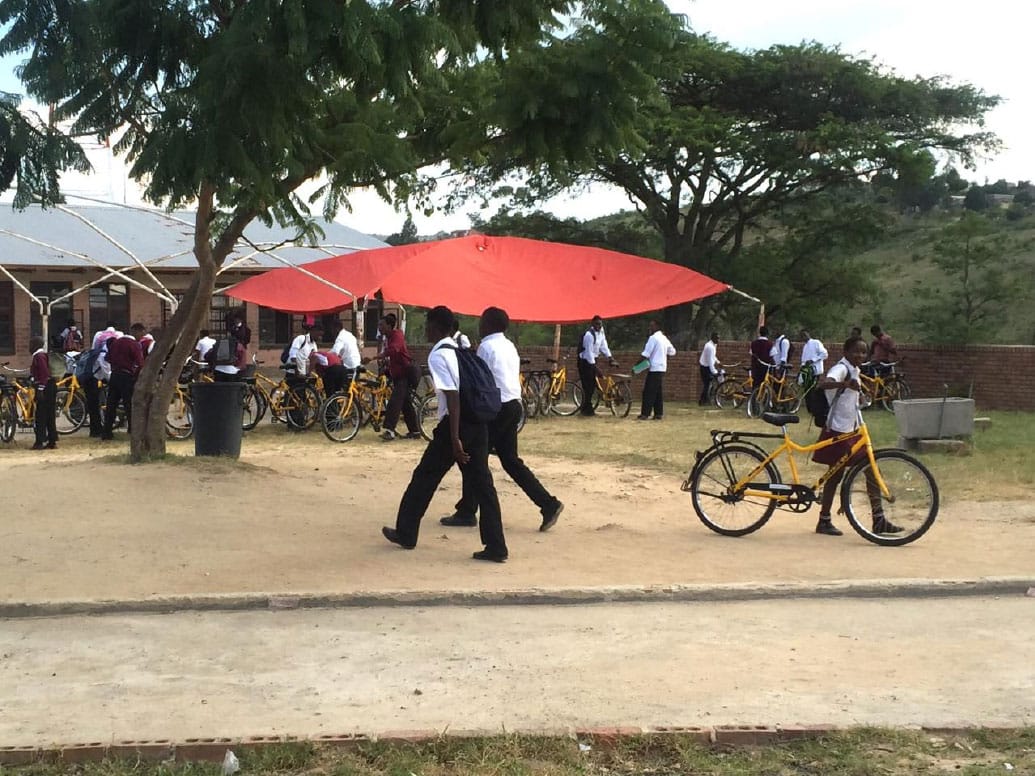
CESAR collaborated with Stanford Research Institute to conduct an opportunity study of World Bicycle Relief’s Bicycle Education Empowerment Programme in Limpopo Province. The study assessed the feasibility, implementation context and impact of bicycle-based interventions to improve access to education and learner outcomes in rural settings. Specifically, the study examined how improved transportation could influence school attendance, punctuality, academic performance and overall learner well-being in a setting with limited transport options and a relatively low bicycle culture.
CESAR contributed to the study design and led fieldwork implementation for the cross-sectional survey of over 200 learners and qualitative interviews with household heads, educators and programme stakeholders. The team conducted mixed-methods analyses and contributed to writing the report.
The study showed that bicycles significantly reduced travel time, improved punctuality and increased time for learning. It also identified key implementation challenges, such as maintenance costs, safety concerns and terrain, that informed programme refinement and scale-up in South Africa.
© 2026 CESAR. All Rights Reserved.